The Smoking Snake: Brazil’s Joint Operations with the U.S. Fifth Army in Italy
By SGM Mauricio da Silva SouzaBrazilian Army
Abstract
This article analyzes the operational and tactical history of the Brazilian Expeditionary Force (FEB) during the Italian Campaign of World War II, focusing on its integration and interoperability with the U.S. Fifth Army and the U.S. IV Corps. Often overlooked in English-language historiography, the deployment of over 25,000 Brazilian Soldiers to the Apennine front represented a unique experiment in multinational coalition warfare. Through a systematic evaluation of primary campaign memoirs and official military histories, this study examines the rapid modernization of Brazilian forces under American logistical channels, the strategic command dynamics between Allied generals, and the technical coordination achieved in medical, artillery, and combat engineering operations. Specific tactical actions, including the grueling trials at Monte Castello, the urban combat in Montese, and the decisive encirclement of the German 148th Infantry Division at Fornovo di Taro, are evaluated to demonstrate the adaptability, technical competence, and fighting value of the Brazilian Soldier. Ultimately, this joint campaign forged a lasting strategic partnership and validated the FEB’s combat capability in the liberation of northern Italy.

Brazil’s involvement in World War II began in the Atlantic, where Axis submarine attacks on Brazilian merchant vessels forced President Getúlio Vargas to declare war in August 1942. While Brazil initially supported the Allied war effort by securing South Atlantic sea lanes and hosting vital U.S. airbases in the Northeast, the government went a step further by organizing the Brazilian Expeditionary Force (Força Expedicionária Brasileira - FEB). Under the command of General João Baptista Mascarenhas de Moraes, this force became the only South American ground division deployed to Europe during the war, serving directly alongside the United States Army in Italy.
The deployment of the FEB was a unique experiment in coalition warfare. It required the rapid modernization, re-equipping, and retraining of an entire national division to match the highly mechanized, fast-paced doctrine of the U.S. Fifth Army. Facing extreme winter weather, challenging mountain terrain, and a battle-hardened enemy, the Brazilian Soldiers demonstrated exceptional adaptability and combat valor.
This article explores the operational history of the FEB, focusing on its strategic integration with Major General Willis D. Crittenberger’s U.S. IV Corps, the command dynamics between General Mascarenhas de Moraes and Lieutenant General Mark Clark, and the tactical contributions of the division. From the bloody trials of Monte Castello to the swift encirclement of an entire German division at Fornovo di Taro, the history of the FEB stands as a landmark of international military cooperation and an evidence to the combat capability of the Brazilian Soldier.
Geopolitical Alignment and the Strategic “Trampoline to Victory”
The path of Brazil from neutrality to active belligerence on the Allied side was a complex process driven by geopolitical maneuvers, economic incentives, and direct military aggression. President Getúlio Vargas’s government maintained a highly pragmatic foreign policy during the late 1930s, carefully balancing relations between the Axis powers and the United States to maximize national development (McCann, 1973). Germany was a major trading partner, and several elements within the Brazilian military elite openly admired German military organization.
However, the United States, recognizing the strategic importance of Brazil’s northeastern bulge, embarked on an intense diplomatic campaign. This effort culminated in substantial financial investments, including loans to build the National Steel Company at Volta Redonda, and military aid under the Lend-Lease Act. In exchange, Brazil granted the U.S. military access to strategic airbases along its northeastern coast, notably at Natal. This region became known as the “Trampoline to Victory,” serving as a vital refueling hub for American aircraft crossing the Atlantic to support Allied operations in North Africa, the Middle East, and Europe (McCann, 1973).
The turning point occurred in August 1942. German submarines, specifically U-507, entered Brazilian territorial waters and torpedoed several unarmed Brazilian merchant ships, resulting in the deaths of over 600 civilians. The resulting public outrage forced President Vargas to abandon his policy of neutrality and declare war on Germany and Italy on August 22, 1942. The decision to mobilize a combat division to fight in Europe was both a military commitment to the Allied cause and a political statement, aimed at securing Brazil a prominent position in the post-war international order. This formal declaration of war marked the beginning of a massive logistical and administrative effort, as the Brazilian military command rushed to organize a modern expeditionary force from a peacetime army unfamiliar with the requirements for modern European combat.
Organizing the FEB: Structural and Training Challenges
Once the political decision was finalized, organizing an expeditionary force from scratch presented the Brazilian military command with severe difficulties. Brazil had not participated in an international conflict since the Paraguayan War of the late nineteenth century. Its military apparatus was largely defensive, fragmented, and trained under a French military doctrine that had proven obsolete during the German blitzkrieg of 1940 (Maximiano & Bonalume Neto, 2011).
The FEB was structured around the 1st Expeditionary Infantry Division, comprising three main infantry regiments:
- The 1st Infantry Regiment, based in Rio de Janeiro.
- The 6th Infantry Regiment, recruited from Caçapava, São Paulo.
- The 11th Infantry Regiment, originating from São João del-Rei, Minas Gerais.
The initial training phase in Brazil was plagued by shortages of modern weaponry, communication gear, and motorized vehicles. Much of the instruction remained theoretical, as the troops had to wait for their arrival in the theater of operations to receive modern American equipment. Furthermore, the selection process for the expeditionary force faced bureaucratic delays and medical screening issues, meaning that many Soldiers arrived in Europe with incomplete training, requiring immediate on-the-job instruction from U.S. military advisors (Brayner, 1968). The successful resolution of these early training deficiencies would ultimately depend on the close professional cooperation and strategic trust established between the senior military leaders of both nations.
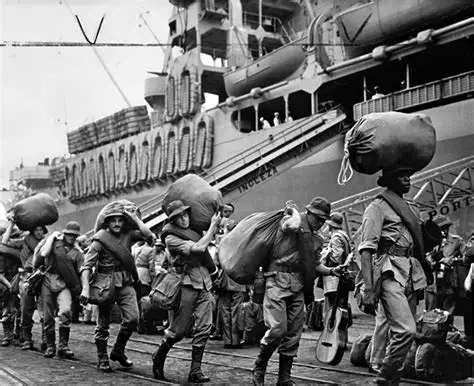
To overcome these structural limitations, the operational success of the FEB depended heavily on strategic coordination between General Mark Clark and General Mascarenhas de Moraes. Clark, who commanded a diverse multinational coalition in Italy, committed the Brazilian division to active sectors rather than relegating them to rear-guard duties. In his personal memoirs, Clark reflected on the unique challenges of commanding an army composed of multiple nationalities, noting that the Brazilian division proved to be a reliable and highly cooperative partner (Clark, 1950).
General Mascarenhas de Moraes protected the operational integrity of the FEB by successfully advocating that his forces would fight together as a unified national division, resisting early suggestions to break up the units to plug gaps in depleted Allied regiments. Clark praised Mascarenhas’s leadership in his memoirs, noting his quiet professional competence and his dedication to the welfare of his men. The cooperation between the two commanders established a level of mutual trust that proved critical during the difficult winter offensives, showing how personal rapport can serve as a force multiplier in coalition warfare (Mascarenhas de Moraes, 1966). Once this unified chain of command was solidified, the newly arrived Brazilian Soldiers were immediately thrust into the front lines to face both a deeply entrenched enemy and the harshest meteorological conditions of the Italian theater.
The Gothic Line and the Apennine Winter
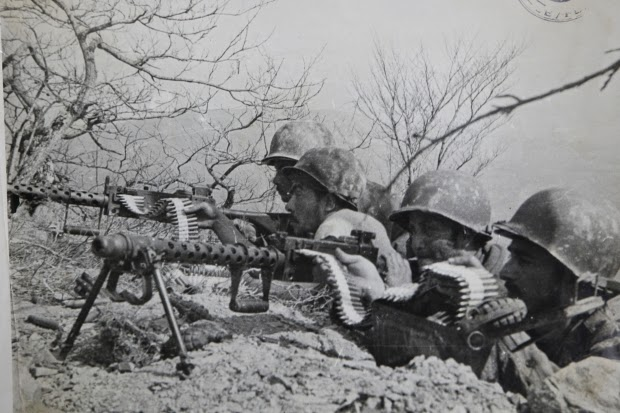
With the command structure unified, the FEB entered the front lines in September 1944 in the Serchio River Valley, clearing Axis outposts and liberating Camaiore and Barga. In late autumn, the division moved to the Reno River Valley to confront the German Gothic Line, a deep defensive network built across the rugged Apennine mountains. The winter of 1944-1945 was one of the coldest on record in northern Italy. The Brazilian troops, unaccustomed to sub-zero temperatures and snow, faced freezing mud, trench foot, and frostbite. Despite the extreme weather, the division maintained its positions, adapted to mountain combat protocols, and sustained its combat effectiveness (Maximiano, 2010).
Joint Medical Operations and Female Integration
While the combat infantry sustained the front lines through the bitter winter, the coalition effort between the FEB and the U.S. Fifth Army extended far into critical support sectors, showcasing a high degree of integration in military medicine and health logistics. The FEB was accompanied to Italy by a dedicated health detachment, which included seventy-three pioneer female nurses who volunteered for service under the Army Health Directorate (Medeiros, 1955). This marked the very first historical instance of women being officially incorporated into the active duty ranks of the Brazilian Army, representing a substantial sociological and administrative leap for the nation.
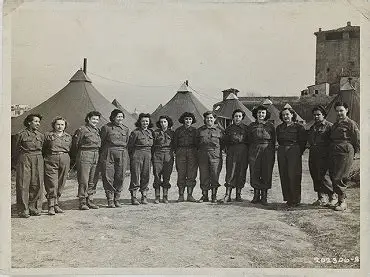
They managed the rapid triage, treatment, and stabilization of combat casualties under intense operational pressure. The integration of Brazilian nursing staff within American hospital structures was highly successful; they adapted seamlessly to advanced American medical protocols, including the utilization of newly developed penicillin and systemic evacuation procedures for wounded Soldiers.
The outstanding performance of these nurses earned high praise from American medical commanders and resulted in numerous decorations, demonstrating that the integration and joint medical support were vital components of the FEB’s overall operational success in the Mediterranean theater (Medeiros, 1955). This high standard of joint coordination in medical logistics was mirrored in the combat arms, particularly in the technical integration of tactical artillery support.
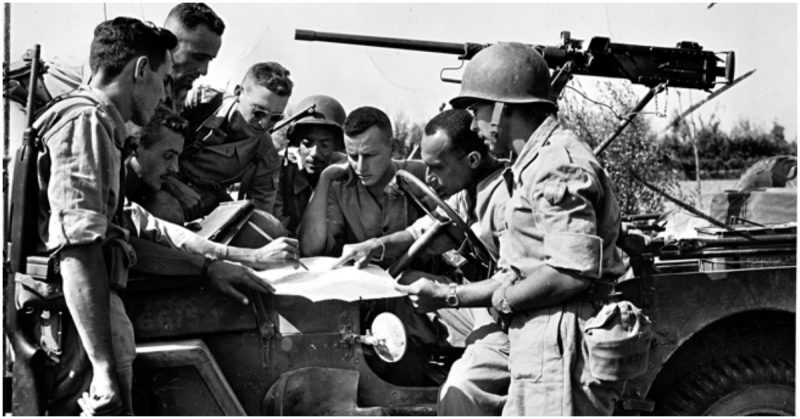
In addition to joint medical operations, the technical cooperation between the two armies achieved remarkable synergy in the coordination of indirect fire support. The FEB’s Divisional Artillery, commanded by the highly capable General Oswaldo Cordeiro de Farias, achieved an exceptional level of technical integration with the U.S. IV Corps. Re-equipped with modern American M101 105mm and M114 155mm howitzers, the Brazilian artillerymen had to quickly master advanced U.S. fire direction methodologies.
The key to this success was the adoption of the U.S. Army’s centralized Fire Direction Center (FDC) system. This system allowed for the rapid mathematical calculation of fire coordinates and the concentration of massed fires from multiple batteries onto a single target. Brazilian artillery officers, despite initially working with different computational systems and language barriers, adapted to American fire control procedures with remarkable speed.
During the grueling mountain offensives, the speed and accuracy of the FEB’s artillery groups became legendary within Major General Crittenberger’s IV Corps. General Cordeiro de Farias’s batteries frequently provided critical, highly precise defensive and preparatory fires not only for the Brazilian infantry but also in support of adjacent American units, such as the U.S. 10th Mountain Division.
This seamless integration of tactical fire direction demonstrated that the FEB had reached a level of technical and doctrinal maturity on par with the most advanced artillery organizations of the Western Allies (Maximiano & Bonalume Neto, 2011). However, the effective delivery of this devastating fire support and the physical advancement of heavy weaponry depended entirely on the tireless efforts of combat engineers working under constant hazard.
Combat Engineering under Fire: The Saga of the “Quebra-Canela”
While the artillery provided firepower, the physical movement of these heavy assets and the sustenance of the front lines depended entirely on combat mobility. To keep the narrow, mud-slicked, and snow-covered mountain roads open for Allied supply trucks and armor, the 9th Combat Engineering Battalion (9º Batalhão de Engenharia de Combate - 9º BE Cmb) of the FEB worked in continuous coordination with U.S. Army engineer units. The arduous and heroic exploits of these combat engineers are vividly recorded in the classic memoir Quebra-Canela, written by General Raul da Cruz Lima Junior, who commanded the battalion’s 2nd Combat Engineering Company during the campaign (Lima Junior, 1982).
The nickname “Quebra-Canela” (Shin-Breaker) carried a dual meaning of hardship and hazard for the Brazilian forces. Officially, it referred to a notoriously steep, rocky, and mud-slicked mountain trail in the Apennines that the engineers had to continuously maintain under constant German shellfire, where Soldiers carrying heavy equipment frequently slipped and battered their shins (Lima Junior, 1982). Tactically, however, the term was also associated by the troops with the devastating effects of German Schu-mines, which were designed to detonate at shin-level upon contact. Operating in freezing temperatures, the battalion's 1st Company constructed the “Sete de Setembro Bridge” over the Usciana Canal, a tributary of the Arno River, in record time, dedicating it on September 7, 1944, to honor Brazil's Independence Day as the very first combat engineering structure completed by the FEB in Europe (Lima Junior, 1982).
Furthermore, the engineers of the 9º BE Cmb served on the absolute front lines during the assaults on Monte Castello and Montese. Moving ahead of the infantry assault waves, these specialized Soldiers used mine detectors and hand-probing techniques to clear gaps through dense German minefields containing lethal Schu-mines and S-mines (Lima Junior, 1982). Their bravery under direct fire allowed Allied tanks and infantry to advance securely, proving that the combat engineers of the FEB were indispensable in overcoming the natural and man-made obstacles of the Gothic Line. With the engineering corridors secured and the artillery batteries fully calibrated, the Allied command was finally prepared to launch its joint forces against the most formidable peak of the sector.
The Tactical Evolution: The Four Trials of Monte Castello
With the critical logistical lines kept open by the engineers and supported by the technical precision of the artillery, the U.S. IV Corps was finally prepared to address its most formidable tactical obstacle: Monte Castello. This mountain position allowed German observers from the 232nd Infantry Division to direct highly accurate artillery fire onto Route 64, the vital supply line for the U.S. IV Corps. The first assault, on November 24, 1944, was executed by the FEB with the American Task Force 45 but failed due to poor coordination and heavy rain. A second attempt on November 29 was repelled by deep mud and minefields (Fisher, 1993).
Two subsequent attacks in December also failed to dislodge the entrenched German defenders. The third assault, on December 12, was particularly devastating, resulting in over 140 Brazilian casualties as Soldiers tried to climb the frozen, open slopes under direct machine-gun fire (Mascarenhas de Moraes, 1966). These early setbacks highlighted the extreme difficulty of mountain warfare against an entrenched enemy and forced the Allied command to redesign their tactical approach.
In February 1945, the newly arrived U.S. 10th Mountain Division joined the line to execute Operation Encore. On February 18-19, the American mountaineers successfully captured Riva Ridge and Mount Belvedere, neutralizing the German artillery observers who had dominated the slopes of Monte Castello (Brooks, 2003). On February 21, the FEB launched its fifth and final assault. Supported by a powerful artillery barrage from both American and Brazilian batteries, the infantry of the 1st and 11th Regiments advanced up the mountain. Utilizing fire-and-maneuver tactics learned through months of combat, the Brazilian Soldiers captured the summit by 1730 hours. The fall of Monte Castello cracked the German defense, opening the way for the Allied breakthrough toward the Po River Valley. Although this victory proved the FEB’s divisional combat capability on a grand scale, the daily security of these hard-won positions continued to rely on the dangerous, small-scale exploits of local combat leaders.
Small-Unit Leadership: The Legacy of Sergeant Max Wolff Filho
Although the victory at Monte Castello proved the FEB’s divisional combat capability, the subsequent operations and the maintenance of the front lines through the early spring continued to depend on the gritty, localized efforts of individual units. Sergeant Max Wolff Filho of the 11th Infantry Regiment became the personification of this grueling patrol warfare. Wolff was a volunteer who quickly gained a reputation for tactical skill, calm leadership under fire, and an ability to bring his men back safely from dangerous reconnaissance missions behind enemy lines (Oliveira, 2008).
On April 12, 1945, during the planning for the final Allied spring offensive, Wolff led a volunteer patrol of nineteen men near Riva di Biscia to locate German machine-gun nests. As the patrol moved through a valley, they were ambushed by concealed German positions. Caught in a crossfire of machine-gun and mortar fire, Sergeant Wolff was mortally wounded. Despite the loss of their leader, the surviving members of the patrol extracted themselves and brought back the critical intelligence Wolff had gathered. Wolff’s death was widely mourned, and his bravery was recognized posthumously with the U.S. Bronze Star and the Brazilian Blood Medal, symbolizing the courage of the ordinary Brazilian Soldier on the front lines. The tactical intelligence secured by sacrificial patrol operations like Wolff’s proved crucial just days later, when the Allies unleashed their final, decisive spring drive across northern Italy.
The Spring Offensive and Operational Triumph
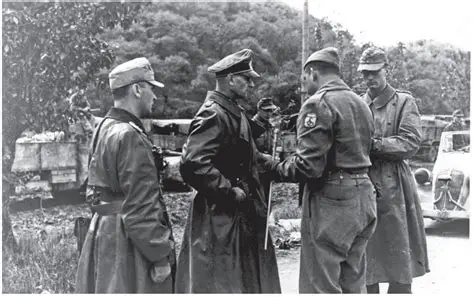
The tactical intelligence secured by these small-unit patrols paved the way for the final Allied offensive in Italy, launched in April 1945, which aimed to destroy the remaining Axis forces south of the Alps. The FEB was tasked with securing the town of Montese, a key defensive stronghold. The Battle of Montese (April 14-17) was a brutal, close-quarters urban engagement against the German 114th Jäger Division (U.S. Army Historical Division, 1951). Brazilian infantry of the 6th Infantry Regiment engaged in house-to-house fighting under heavy artillery fire. The battle cost the FEB over 400 casualties but successfully broke the German defensive pivot in the sector, allowing Allied armored units to pour into the Po Valley (Brayner, 1968).
Conclusion: The Tactical and Strategic Legacy of the FEB
The operational history of the Brazilian Expeditionary Force in the Italian Campaign represents a remarkable case study in rapid military modernization and successful coalition warfare. The FEB, despite arriving in Europe with obsolete training, inadequate equipment, and no modern combat experience, successfully transformed into a highly professional combat division. Under the command of General Mascarenhas de Moraes and integrated within the logistical and command channels of the U.S. Fifth Army, the Brazilian Soldiers proved that they could quickly master advanced tactical doctrine and technical combat methodologies under the most punishing physical and environmental conditions of the Apennine front.
The evidence of this successful interoperability is visible across all branches of the division’s service. In the medical sector, the integration of Brazilian nurses within U.S. hospital networks successfully pioneered the deployment of female officers on the front lines. Technically, the divisional artillery under General Cordeiro de Farias achieved complete synergy with the U.S. IV Corps through the adoption of the American Fire Direction Center system. In terms of combat support, the 9th Combat Engineering Battalion played an indispensable role in maintaining Allied supply lines and clearing German minefields under continuous hostile fire. Ultimately, these technical achievements paved the way for the historical victories at Monte Castello and Montese and culminated in the brilliant encirclement of a full German division at Fornovo di Taro.
Finally, the campaign of the FEB transcended the immediate tactical successes of the Italian theater, leaving a profound strategic legacy. It established a model of successful joint operations between a major global superpower and a rising South American partner, proving that mutual trust and doctrinal adaptability can serve as the ultimate force multipliers in multinational coalition warfare. The “Smoking Snake” did not merely validate its unlikely symbol through fire and blood in the frozen valleys of the Reno and the Serchio; it proved to the world that when freedom was on the line, the Brazilian Soldier fought with the technical skill, resilience, and courage of a world-class warrior.
References
Brayner, Floriano de Lima. A Verdade sobre a FEB: Memórias de um Chefe de Estado-Maior. Rio de Janeiro: Civilização Brasileira, 1968.
Brooks, Thomas R. The War North of Rome: June 1944 - May 1945. New York: Da Capo Press, 2003.
Clark, Mark W. Calculated Risk: The War Memoirs of a Great American General. New York: Harper & Brothers, 1950.
Crittenberger, Willis D. Final Campaign Across Northwest Italy: 14 April–2 May 1945. Milan: Pizzi, 1945.
Fisher, Ernest F. Jr. Cassino to the Alps. United States Army in World War II: The Mediterranean Theater of Operations. Washington D.C.: Center of Military History, 1993.
Lima Junior, Raul da Cruz. Quebra-Canela: A Engenharia Brasileira na Campanha da Itália. Rio de Janeiro: Biblioteca do Exército, 1982.
Mascarenhas de Moraes, João Baptista. The Brazilian Expeditionary Force by Its Commander. Washington D.C.: U.S. Government Printing Office, 1966.
Maximiano, Cesar Campiani. Barbudos, Sujos e Fatigados: Soldados Brasileiros na II Guerra Mundial. São Paulo: Grua Livros, 2010.
Maximiano, Cesar Campiani & Bonalume Neto, Ricardo. Brazilian Expeditionary Force in World War II. Men-at-Arms Series. Oxford: Osprey Publishing, 2011.
McCann, Frank D. The Brazilian-American Alliance, 1937-1945. Princeton: Princeton University Press, 1973.
Medeiros, Elza Cansanção. Nas Barbas do Tedesco. Rio de Janeiro: Biblioteca do Exército / Companhia Editora Americana, 1955 .
Oliveira, Dennison de. Os Soldados Brasileiros de Segunda Guerra Mundial. Curitiba: Juruá Editora, 2008.
U.S. Army Historical Division. The Allied Spring 1945 Offensive in Italy. Washington D.C.: Department of the Army, 1951.
About the Author:
SGM Mauricio Souza is currently serving as an instructor in the Department of Army Operations (DAO) at the U.S. Army NCO Academy
He is a graduate of Class 66 and previously contributed to NCO development as an instructor at the Escola de Sargentos das Armas (ESA) (Brazilian NCO Academy), one of the most respected military schools in Brazil.
Correspondence concerning this article should be addressed to SGM Mauricio Souza, mauricio.dasilvasouza.fm@army.mil.
* Views expressed by contributors are their own and do not necessarily represent those of MilitaryHistoryOnline.com.